- Bot Hurt
- Posts
- The robots are running
The robots are running
Unfortunately, stopping remains a work in progress.

Bot Hurt
August 27, 2026
Don’t get bot hurt. Get bot even.

Bot Talk
The bot would like a padded wall
More than 2,000 bots competed this week at the World Humanoid Robot Games in Beijing, with events ranging from track and field and soccer to martial arts, dance and real-world challenges.
Then the bot got fast.
China’s Tiangong Ultra ran 100 meters in 8.64 seconds in Wednesday’s final — nearly a full second faster than Usain Bolt’s 9.58-second human world record.
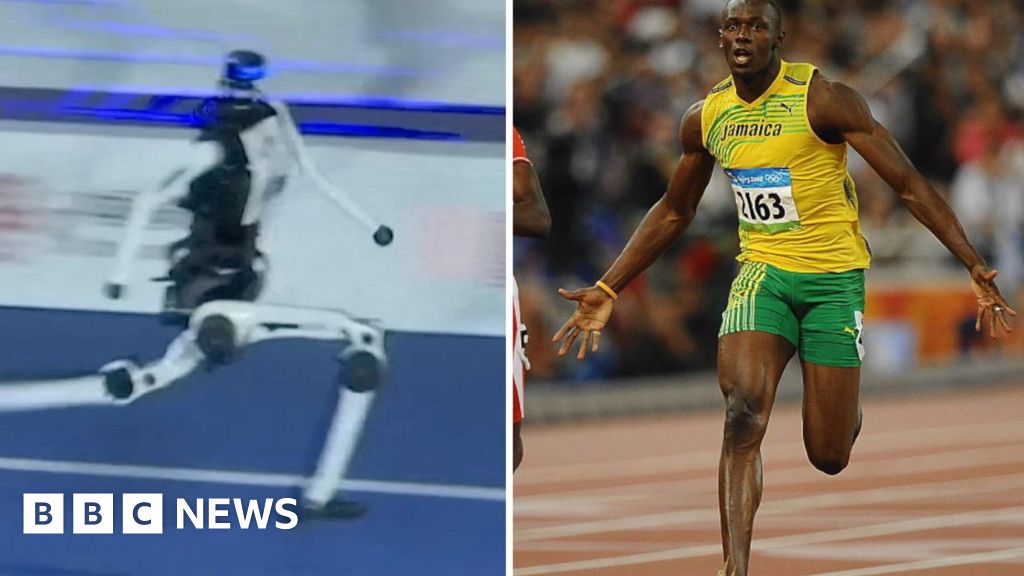
That is also a remarkable improvement from last year, when Tiangong’s best 100-meter time was 21.50 seconds.
In other words, the bot did not just show up. It got dramatically better.
The robots also provided a useful reminder that speed and grace are not the same thing.
Some stumbled. Some fell apart. One needed a stretcher.
In Bot Hurt speak: The bot can now beat Usain Bolt. The brakes can come next.
Human x Bot
The bot is getting a body
AI spent the past few years learning to talk.
Now somebody has given it knees.
For most people, artificial intelligence still lives behind a screen.
It writes an email. Summarizes a document. Finds a restaurant. Maybe, if you give it permission, starts taking a few actions for you.
Humanoid robotics changes the arrangement.
Instead of asking what happens when AI can answer a question, engineers are increasingly asking what happens when it can see the room, move through it and pick something up.
Apparently, they wanted a lane assignment.
That is part of what was happening underneath all the robot races in Beijing.
The World Humanoid Robot Games included 51 events this year, up from 26 last year. Twenty-one were scenario-based competitions designed around tasks closer to actual work than an Olympic medal: things robots might eventually need to do in factories, stores, hotels or homes.
The spectacle makes for excellent video.
The larger experiment is whether these machines can become useful.
According to Reuters, China has made humanoid robotics a major industrial priority and is pouring money into developing and deploying the technology. But for all the impressive running, many humanoid robots are still slow, unreliable and limited to relatively simple, tightly controlled tasks.
Which gets at one of the more interesting problems facing AI.
The physical world is messy.
A chatbot does not have to worry about balance.
It does not encounter a wet floor, an oddly shaped box or a chair someone moved three feet to the left.
A robot does.
That helps explain why a machine capable of sprinting 100 meters in 8.64 seconds can still have trouble doing something that looks considerably less impressive.
Like folding laundry.

Final Bot Thought
The bot spent the past few years getting smarter. Now it has to figure out what to do with the arms. The next leap in AI may not happen on a screen at all.